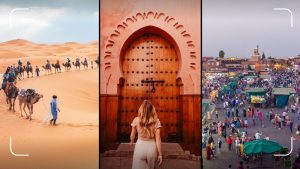
Travelers planning a first trip to Morocco almost always end up comparing Marrakech, Casablanca, and Fes—and for good reason. These are the country’s most talked-about cities, they all appear on classic itineraries, and they each promise something different. The problem is that many people assume they offer similar experiences and can be swapped easily. They can’t.
These three cities are not interchangeable. Choosing one over the others changes how fast your days move, how comfortable you feel getting around, how much energy you spend navigating, and what your daily routine looks like from morning to night, especially on your first trip to Morocco .
Marrakech is intense and tourism-driven, with strong contrasts between chaos and comfort. Casablanca is Morocco’s economic center, built around work, routines, and modern urban life rather than sightseeing. Fes is deeply traditional, structured around history, crafts, and a medina that still functions as a living workspace. Each city asks something different from you as a visitor.
As a Moroccan local guide, I don’t favor one city over another. I see travelers enjoy all three—and I also see travelers choose the wrong one for their style and end up tired, overwhelmed, or disappointed. This comparison is meant to help you choose the city that actually fits how you travel, how much time you have, and what kind of daily experience you want once you arrive.

Quick Comparison Overview (At a Glance)
Travelers often look for a fast, practical way to understand the real differences between Marrakech, Casablanca, and Fes. At a glance, these cities serve very different purposes. Marrakech is built around tourism and contrast, Casablanca reflects modern Moroccan working life, and Fes is focused on history, tradition, and craft. The “best” choice depends less on landmarks and more on how you like to travel day to day.
| Category | Marrakech | Casablanca | Fes |
|---|---|---|---|
| One-line description | High-energy tourist city with strong contrast between historic chaos and modern comfort | Morocco’s economic capital, modern, work-oriented, least tourist-focused | Traditional cultural center with a preserved historic medina and slower rhythm |
| Best for first-time visitors | ✅ Best choice | ⚠️ Possible but not ideal | ⚠️ Can feel demanding |
| Best for culture & history | ⚠️ Highlights only | ❌ Limited | ✅ Best choice |
| Best for modern daily life | ⚠️ Only in modern districts | ✅ Best choice | ❌ Traditional focus |
| Best for short trips (2–3 days) | ✅ Very suitable | ⚠️ Only with specific purpose | ✅ Focused cultural visit |
| Best for longer stays (5+ days) | ✅ Variety + day trips | ✅ Routine-based living | ⚠️ Intense over time |
| Overall takeaway | Intensity & variety | Real urban Morocco | Depth & tradition |
Marrakech: Energy, Tourism, and Contrast
What Marrakech Feels Like Day and Night

During the day, Marrakech is busy, loud, and constantly moving. Traffic is heavy, especially around the medina and main avenues, and the city operates on a mix of tourism, local commerce, and daily work life. Motorbikes, taxis, delivery carts, and pedestrians all compete for space. Tour groups start early, shops open quickly, and popular areas fill up fast.
At night, the intensity increases rather than fades. Crowds grow thicker in the medina, especially around Jemaa el-Fna, where food stalls, performers, and visitors pack into a relatively small area. Noise levels rise, movement slows, and the city feels more compressed. Some travelers love this energy. Others find it exhausting after a full day of walking.
The Medina Experience: What Visitors Love and What Surprises Them
The medina is the heart of Marrakech’s appeal. Visitors are drawn to the souks, the colors, the density of shops, and the feeling that something is happening in every direction. Jemaa el-Fna acts as the main entry point, leading into a maze of narrow streets filled with stalls selling leather, lamps, spices, textiles, and souvenirs.
What surprises many visitors is the level of selling pressure. Shop owners call out constantly, bargaining is expected, and directions are not always freely given. Navigation can be stressful, especially for first-time visitors, and it’s easy to feel disoriented. Getting lost is common, and while it’s usually safe, it can be mentally tiring after a few hours.
Calm Spaces and Cultural Sites
Marrakech does offer calm, structured spaces that balance the chaos of the medina. Palaces, gardens, and museums operate with clear entrances, fixed ticket prices, and defined visiting paths. Places like Bahia Palace, El Badi Palace, and Jardin Majorelle give visitors a break from constant interaction.
These sites are usually quieter, more organized, and easier to enjoy at your own pace. For many travelers, these moments of calm are essential to enjoying the city as a whole. Without them, Marrakech can feel overwhelming very quickly.
Modern Neighborhoods (Gueliz, Hivernage)
Outside the medina, Marrakech changes noticeably. Neighborhoods like Gueliz and Hivernage are wider, cleaner, and more predictable. Streets are easier to navigate, cafes have fixed menus, and interactions are more relaxed.
These areas offer international restaurants, modern hotels, rooftop bars, and nightlife that feels familiar to many visitors. This is why some travelers choose to stay here and only visit the medina during the day. This reduces daily stress and allows for a more balanced experience, especially for longer stays, and makes it easier to plan what to wear in Marrakech in November.
Food Scene in Marrakech
Street food is popular, especially in the evening, with stalls serving grilled meats, sandwiches, and traditional dishes, for travelers visiting Marrakech in December . Quality can vary, and prices around tourist-heavy areas are often higher than elsewhere.
Restaurants range from simple local eateries to high-end dining experiences. Tourist pricing is common in central areas, but good value spots exist if you move slightly away from main attractions. The key difference compared to other cities is volume: more choice, more competition, and more variation in quality.
Who Marrakech Is Best For (and Who It’s Not)
Marrakech is best for:
- First-time visitors who want a clear introduction to Moroccan tourism
- Travelers who enjoy busy environments and strong contrasts
- Short stays where intensity is part of the appeal
- Visitors who want access to many tours, day trips, and accommodation options
Marrakech may not suit:
- Travelers sensitive to crowds, noise, or constant interaction
- People looking for a slow, routine-based city experience
- Those who tire easily from walking, negotiating, and navigating
Marrakech offers a lot, but it asks for energy in return. Understanding that balance is key to enjoying it rather than feeling overwhelmed.
Casablanca: Modern Morocco and Real Urban Life

Why Casablanca Feels Different
Casablanca feels different because it is not built around visitors. This is a work-first city where daily life takes priority over sightseeing. Offices open early, traffic follows business hours, and most people you see are commuting, meeting clients, or managing family routines. Tourism exists, but it is not the organizing force of the city.
There is very little tourist staging compared to other Moroccan cities. You won’t find large pedestrian zones designed for visitors or constant attempts to sell experiences. For some travelers, this feels refreshing and honest. For others, it can feel less engaging if they expect a traditional sightseeing rhythm.
Hassan II Mosque and Its Significance
The main landmark is the Hassan II Mosque, one of the largest mosques in the world. Its importance is cultural and symbolic rather than decorative. It represents modern Moroccan craftsmanship, religious identity, and national ambition, and it sits directly over the Atlantic Ocean.
Unlike most mosques in Morocco, non-Muslim visitors are allowed inside on guided tours at specific times. Entry is organized, ticketed, and regulated, which makes the visit straightforward. For many travelers, this is the primary reason to stop in Casablanca, and it can be visited comfortably in a few hours without navigating a medina.
Coastal Life, Cafes, and Nightlife
Casablanca’s coastline plays a big role in how people live. The Ain Diab Corniche is where locals walk, jog, meet friends, and sit in cafes facing the ocean. This area is active throughout the day and especially busy in the evenings and on weekends.
Cafes are central to social life. People spend long periods sitting, talking, working, or watching football. Nightlife exists but is spread out—lounges, restaurants, and bars are integrated into daily urban life rather than concentrated in one zone. The rhythm is calmer and more routine-based than in tourist cities.
Neighborhoods That Matter
Casablanca works through its neighborhoods rather than a single historic center. Areas like Gauthier and Racine are important because they combine housing, offices, restaurants, and cafes. These are places where locals live, not areas designed for sightseeing.
The city center is functional rather than scenic. Wide avenues, administrative buildings, and mixed architecture define the space. Understanding Casablanca means spending time in these everyday neighborhoods, not moving from attraction to attraction.
Language, Pace, and Social Interaction
French is the dominant working language in Casablanca, especially in business, restaurants, and administration. English is spoken, but less consistently than in tourist-focused cities. Communication tends to be direct and efficient, with less small talk.
The pace of interaction reflects the city’s priorities. People are generally helpful but not overly attentive to visitors. This is not rudeness—it’s simply a city where most interactions are transactional and time-conscious.
Who Casablanca Is Best For
Casablanca is best for:
- Travelers curious about modern Moroccan urban life
- Visitors who prefer routine, structure, and less sensory pressure
- People comfortable navigating large cities
- Longer stays focused on living rather than sightseeing
Casablanca may not suit:
- Travelers expecting constant landmarks and guided experiences
- Short trips where time is limited
- Visitors who want a traditional medina-centered experience
Casablanca doesn’t try to impress. It shows how Morocco functions today, and that honesty is exactly what some travelers are looking for.
Fes: History, Craft, and Traditional Urban Life

How Fes Differs from Marrakech
Fes operates on a very different logic than Marrakech. It is far less tourism-driven and much more inward-focused. The city does not constantly adapt itself to visitors, and that difference is felt immediately. Daily life here follows long-established routines tied to craft, religion, and neighborhood structure rather than visitor demand.
Tourism exists, but it does not dominate the rhythm of the city. Shops open for work, not for browsing. Streets function as workspaces first. As a result, Fes feels quieter in some moments and more intense in others, especially inside the medina, where life has not been reorganized for ease or comfort.
Navigating the Medina (Fes el-Bali)
The historic heart of the city, Fes el-Bali, is one of the largest and most complex pedestrian medinas in the world. Navigation is genuinely difficult. Streets are narrow, signs are minimal, and many routes look identical. GPS often fails or becomes unreliable due to density and layout.
Because of this, hiring a local guide is not about convenience—it’s practical. A guide helps with orientation, explains what you’re seeing, and prevents unnecessary stress. Without one, many visitors spend more time trying to find their way than actually understanding the city around them.
Daily Life Inside the Medina
Fes el-Bali is not a preserved monument; it is a working urban space. Workshops line the streets, artisans shape metal or wood by hand, and donkeys still transport goods through narrow alleys. The medina is loud, busy, and sometimes overwhelming.
Sensory intensity is part of daily life here. Smells from food, leather, and dye mix together. Space is tight, and movement requires attention. This environment can be fascinating, but it also demands patience. Unlike Marrakech, there is less visual spectacle designed to attract attention and more raw functionality.
Crafts and Traditional Work
Fes is known for traditional crafts, particularly leatherwork, metalwork, ceramics, and wood carving. The Chouara Tannery is the most famous example. It shows leather processing methods that have remained largely unchanged for centuries.
That said, authenticity does not mean absence of sales. Tanneries and workshops are businesses, and visitors are often guided through showrooms afterward. Prices vary, and bargaining is expected. The craft is real, but the sales process is still commercial. Understanding this balance helps set realistic expectations.
Food Culture in Fes
Food in Fes is deeply traditional. Dishes are heavier, more structured, and often tied to family-style cooking rather than casual eating. Meals tend to be planned rather than spontaneous. You’ll find excellent examples of classic Moroccan cuisine, but fewer quick or informal options.
Restaurants are less numerous than in Marrakech, and street food is more limited. Dining is slower and more intentional. This suits travelers who enjoy sitting down for proper meals, but it can feel restrictive for those used to flexible eating schedules.
Who Fes Is Best For (and Who May Struggle)
Fes is best for:
- Travelers interested in history, craft, and traditional urban systems
- Visitors comfortable with walking, crowds, and sensory intensity
- People who enjoy guided experiences and structured learning
- Travelers looking for depth rather than variety
Fes may be challenging for:
- First-time visitors who prefer easy navigation
- Travelers sensitive to smells, noise, or confined spaces
- Families with very young children or limited mobility
- Visitors expecting constant entertainment or nightlife
Fes does not try to impress quickly. It requires time, focus, and energy. For the right traveler, it can be deeply rewarding. For others, it can feel demanding. Knowing which category you fall into makes all the difference.
Real Comparisons Travelers Actually Care About
Atmosphere & Pace of Life
The biggest difference between Marrakech, Casablanca, and Fes is how each city moves through the day.
Marrakech runs on energy. Days are fast, noisy, and visually intense, and the pace rarely slows down. Tourism shapes daily life, so movement, interaction, and crowds are constant. You are always navigating something.
Casablanca follows routine. The city wakes up for work, slows down in the evening, and becomes social around cafes and the coast. It feels predictable once you understand it, and days follow a clearer structure.
Fes is driven by tradition. Time feels layered rather than fast. Workshops open when they need to, streets flow around work rather than schedules, and the rhythm is inward-focused. This can feel calm or demanding, depending on the traveler.
Weather & Climate Differences (Practical Reality)
Weather has a direct impact on comfort, especially for walking-heavy cities.
Marrakech and Fes both experience strong summer heat, but it feels different. Marrakech heat is dry and intense, with temperatures often exceeding comfort levels from late morning to early evening. Walking long distances in the medina during summer can be exhausting, and shade is limited.
Fes also gets very hot in summer, and in some cases feels heavier. The enclosed nature of the medina traps heat, and airflow is limited. Combined with crowds and narrow streets, this can make summer visits physically demanding.
Casablanca is moderated by the Atlantic Ocean, which affects comfort and clothing choices, especially when planning what to wear in Morocco in December. Temperatures are generally lower, and ocean breezes help regulate heat. Humidity exists, but walking is easier, and evenings cool down more reliably. For travelers sensitive to heat, Casablanca is consistently more comfortable.
Costs: Accommodation, Food, Transport
Costs vary by city, but value matters more than raw price.
Marrakech has the widest price range. You can find budget riads, luxury hotels, and everything in between. Food pricing varies sharply depending on location—central tourist areas charge more, while value exists a few streets away. Transport costs are reasonable, but taxis add up due to traffic.
Casablanca accommodation is generally mid-range to high for quality stays, especially in central neighborhoods. Food pricing is more stable and often better value for quality. Transport is affordable, but distances are longer.
Fes offers good value for traditional riads and guided experiences. Food is reasonably priced but less varied. Transport costs are low because most movement is on foot, but guided services add to the budget.
Getting Around Within Each City
Getting around affects daily stress more than most travelers expect.
Marrakech requires a mix of walking and taxis. The medina is pedestrian-only, but navigating it takes energy. Taxis are plentiful but traffic is heavy, especially during peak hours.
Casablanca relies on taxis, trams, and walking depending on the neighborhood. Distances are larger, but streets are clearer. Navigation is straightforward once you understand the layout.
Fes is almost entirely walk-based inside the medina. Streets are narrow and uneven, and taxis cannot enter historic areas. This makes walking unavoidable and tiring for some travelers, especially over multiple days.
Safety & Comfort for Visitors
All three cities are generally safe, but discomfort usually comes from environment rather than danger, particularly for women traveling alone.
In Marrakech, discomfort often comes from selling pressure, crowd density, and constant interaction. Scams are usually low-level and situational.
In Casablanca, traffic is the main issue. Crossing streets and navigating busy roads requires attention. Social interaction is minimal, which some travelers misinterpret as unfriendliness.
In Fes, getting lost and sensory overload are the main challenges. Streets are tight, signage is limited, and the environment demands focus. The city is safe, but mentally demanding.
The key difference is not safety itself, but how much effort each city asks from you to feel comfortable day after day.
What You Can See Beyond Each City (Day Trips & Bases)

Marrakech as a Base
Marrakech is the strongest base city in Morocco when it comes to day trips and excursions. The reason is simple: geography and infrastructure. Major landscapes are close, roads are well-used, and tours operate daily.
The Atlas Mountains are less than an hour away, making half-day or full-day trips realistic without long travel fatigue. Villages, valleys, and mountain scenery are accessible without changing hotels.
The Ourika Valley is one of the easiest day trips in the country. It works well for travelers with limited time who still want nature, riverside lunch stops, and a break from city heat.
For longer extensions, Marrakech is the main launch point for desert tours. Multi-day trips to the Sahara are structured, reliable, and time-efficient from here. This makes Marrakech ideal if you want one base city with several very different environments nearby.
Fes as a Base
Fes works best as a cultural base rather than an adventure hub. The nearby destinations are historically important but fewer in number.
Meknes is close enough for a half-day or easy full-day visit. It offers a calmer imperial-city experience without heavy crowds.
The Roman ruins of Volubilis are another logical trip from Fes. Distance is manageable, but transport is usually organized rather than spontaneous.
Nature trips from Fes focus on the Middle Atlas, including Ifrane and nearby cedar forests. These are seasonal destinations and work best as relaxed day trips, not high-energy excursions.
Casablanca as a Base
Casablanca is a limited base for day trips. Options exist, but they are fewer and more linear.
The most logical trip is Rabat, which is close, efficient to reach by train, and easy to visit in one day.
Some coastal towns are reachable, but distances are longer and less rewarding unless you have specific reasons to go. Casablanca’s value is the city itself, not its surroundings.
Bottom line:
- Marrakech offers the most variety with the least travel effort
- Fes offers focused cultural extensions
- Casablanca works best without relying on day trips
Time and distance matter more here than ambition.
Airport Arrival & First-Day Experience
Marrakech Airport
Marrakech Menara Airport is close to the city center, usually 15–20 minutes by car depending on traffic. The airport is very used to tourists, and services like taxis, transfers, and guides are easy to arrange. Signage is clear, and staff are accustomed to first-time visitors.
That said, arrivals can feel intense. Crowds form quickly, drivers call out names, and the transition from airport to city is fast and noisy. For confident travelers, this is manageable. For others, the first impression can feel overwhelming, especially after a long flight.
Casablanca Airport
Mohammed V International Airport is Morocco’s main international hub and is more structured but farther from the city. Transfers to central Casablanca usually take 45–60 minutes, sometimes longer during peak hours.
The airport itself is organized, with clearer procedures and less crowd pressure. Train connections, official taxis, and private transfers are well regulated. The downside is fatigue: after landing, you still have a long ride before reaching your hotel, which can affect your first day plans.
Fes Airport
Fes–Saïss Airport is small and quiet compared to the other two. Arrivals are calmer, with fewer crowds and less noise. The atmosphere is more relaxed, which many travelers appreciate after flying.
Transport options are more limited, however. Taxis are available, but fewer drivers speak English, and transfers should ideally be arranged in advance. The drive to the city is short, but reaching a riad inside the medina often requires walking, which can be tiring on arrival.
Arrival experience sets the tone. How much stress you want on day one matters more than most people expect.
Which City Fits Your Travel Style?
Choosing between Marrakech, Fes, and Casablanca comes down to how you actually travel day to day. Below are clear matches—no overlap, no theory.
First-Time Visitors
Best fit: Marrakech
You’ll find the highest concentration of visitor services, tours, guides, and accommodation options. Logistics are simple, help is everywhere, and it’s easier to recover if something goes wrong. Casablanca is less intuitive, and Fes requires more planning.
Culture & History Lovers
Best fit: Fes
If your priority is understanding traditional urban life, crafts, and long-standing systems, Fes delivers depth. The city rewards focus and guided exploration. Marrakech offers highlights, but Fes offers structure and continuity.
Comfort-Focused Travelers
Best fit: Casablanca (or Marrakech outside the medina)
Casablanca offers predictable streets, cafes, transport, and less interaction pressure. If you choose Marrakech, staying in modern districts rather than the medina improves comfort significantly. Fes is the least comfortable physically.
Short Trips (2–3 Days)
Best fit: Marrakech or Fes
Marrakech works for high-impact sightseeing in a short window. Fes works for a focused cultural visit with a guide. Casablanca is not efficient for short stays unless you have a specific reason to be there.
Slow Travelers (5+ Days)
Best fit: Casablanca or Marrakech
Casablanca supports routine living—cafes, walks, work-friendly spaces. Marrakech works if you balance medina visits with calmer neighborhoods and day trips. Fes is intense over many days unless you are deeply interested in its culture.
Quick Decision Summary
- Choose Marrakech if you want variety, energy, and easy logistics
- Choose Fes if you want depth, tradition, and guided learning
- Choose Casablanca if you want routine, space, and modern daily life
There is no universal “best city.” The right choice is the one that matches how much energy you want to spend each day just moving through the city.
Families, Seniors & Mobility Considerations
When choosing between Marrakech, Fes, and Casablanca, physical comfort matters as much as interest. Walking conditions vary a lot, and they directly affect enjoyment.
Walking Difficulty by City
Marrakech involves moderate to heavy walking, especially inside the medina. Streets are uneven, crowded, and sometimes stepped. Distances between sites can be long, but taxis help reduce fatigue if you plan carefully.
Fes is the most demanding. The medina has steep alleys, stairs, cobblestones, and constant foot traffic. Taxis cannot enter, so walking is unavoidable. This can be challenging even for fit travelers.
Casablanca is the easiest physically. Streets are wide, pavements are flatter, and taxis are always nearby. Walking is optional rather than necessary.
Best and Worst by Traveler Type
Families with kids
- Best: Marrakech (if staying outside the medina) or Casablanca
- Most challenging: Fes, due to walking and crowd density
Older travelers
- Best: Casablanca for ease and predictability
- Manageable: Marrakech with guided visits and rest breaks
- Difficult: Fes without strong support
Limited mobility
- Best: Casablanca
- Possible with planning: Marrakech (modern areas only)
- Not recommended: Fes medina
This isn’t about age—it’s about environment. Choosing the city that matches physical needs builds trust, reduces stress, and makes the trip enjoyable rather than tiring.
Suggested Itineraries Using These Cities
5-Day Trip Logic
With five days total, focus is essential. Trying to cover too much reduces quality.
Best options:
- Marrakech only:
3 days in the city + 1 day trip (Atlas Mountains or Ourika Valley) + 1 flexible day. This works well for first-time visitors who want variety without constant hotel changes. - Fes only:
2 full days with a guide in the medina + 1 day trip to Meknes and Volubilis + arrival/departure days. Best for culture-focused travelers. - Casablanca + Rabat:
Logical if arriving and departing from Casablanca and interested in modern life and administrative history.
Avoid combining Marrakech and Fes in 5 days unless you are comfortable losing a full day to travel.
7-Day Trip Logic
Seven days allow for one strong combination without rushing.
Most efficient structures:
- Marrakech (4 days) + Fes (3 days):
Fly or train between cities. Marrakech handles arrival, energy, and excursions; Fes provides cultural depth at the end. - Marrakech (5 days) + day trips:
Ideal for travelers who want one base with variety and minimal packing. - Casablanca (3 days) + Marrakech (4 days):
Works if you want modern urban life first, then a tourism-focused experience.
Each option keeps travel time controlled and days balanced.
Why Not to Rush All Three Cities
Covering Casablanca, Marrakech, and Fes in one short trip usually means:
- Too much time in transit
- Constant hotel changes
- Limited energy for walking-heavy medinas
These cities demand attention and physical effort. Rushing them turns the trip into logistics instead of experience.
Bottom line:
Fewer cities, more time per place always delivers a better result in Morocco.
Final Verdict: Marrakech vs Casablanca vs Fes
Marrakech is the right choice if you want energy, variety, and easy access to tours and day trips. It offers the most options in a short time, but it also demands stamina. Crowds, noise, and constant interaction are part of daily life. Choose Marrakech if you’re comfortable with intensity and want a high-impact experience, especially on a first visit.
Casablanca works best for travelers who value routine, space, and modern urban life. It is the least tourist-oriented and the most physically comfortable. You won’t be moving from sight to sight; instead, you’ll experience how Morocco functions today. Choose Casablanca if you prefer predictable days, easier walking, and lower sensory pressure.
Fes is ideal for travelers focused on history, craft, and traditional urban systems. It offers depth rather than variety and requires effort to navigate. Walking is unavoidable, guides are practical, and days can be demanding. Choose Fes if cultural understanding is your priority and you’re prepared for a slower, more intense experience.
No city is better than the others. The right choice depends on how fast you want your days to move, how much physical and mental effort you’re comfortable with, and what you want your daily experience to feel like once you arrive.
Practical Tips From a Moroccan Local
Best Seasons per City
- Marrakech: March–May and October–November. Summer heat is intense and tiring for walking-heavy days.
- Fes: April–May and September–October. Avoid mid-summer if heat tolerance is low.
- Casablanca: Year-round workable, but May–October is most comfortable thanks to ocean breeze.
Clothing & Etiquette
Dress for walking and heat, not photos. Closed shoes with good grip matter in medinas. Light, loose clothing helps everywhere. Modest dress is practical in Fes and medinas—less attention, fewer awkward moments. Evenings can be cool in Casablanca due to wind.
Cash & Bargaining
Carry small bills. Many places won’t have change. Bargain in souks and informal shops; don’t bargain in restaurants, cafes, or places with fixed menus. If bargaining feels stressful, choose modern districts or clearly priced shops.
When to Use Guides
- Fes: Strongly recommended for the medina—navigation and context matter.
- Marrakech: Useful for the first medina visit to reduce stress.
- Casablanca: Rarely needed unless visiting the Hassan II Mosque or for specific themes.
Final Advice
Plan fewer activities per day than you think. Most travel mistakes here come from underestimating walking, heat, and mental fatigue—not from lack of sights.