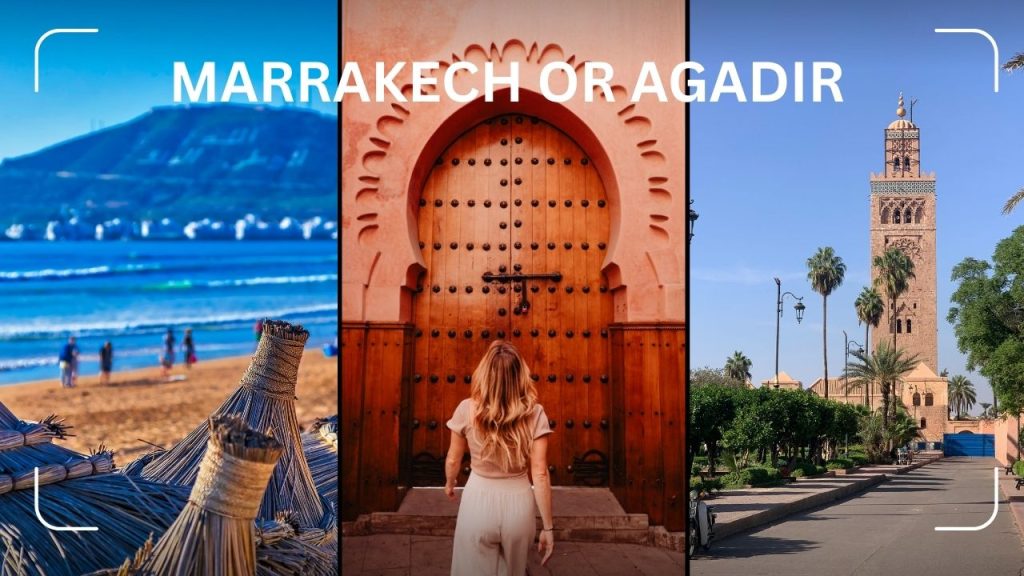
Marrakech and Agadir are both in Morocco, but they offer two very different travel experiences. As a local guide, I often say it’s like choosing between two moods of the same country. One is intense, historic, and full of movement; the other is relaxed, open, and shaped by the ocean. Neither is “better” in general—it really depends on what kind of trip you want.
Marrakech pulls you into the heart of Moroccan culture: old medina streets, riads hidden behind wooden doors, the call to prayer echoing at sunset, and evenings that feel alive until late, especially when comparing Agadir or Marrakech nightlife. Agadir, on the other hand, is about space and breathing room—long beach walks, Atlantic breezes, slower mornings, and an easy rhythm that many travelers appreciate.
In this guide, I’ll help you choose based on real travel experience, not hype—so you can decide what fits your trip best.
Comparison table: Agadir vs Marrakech (at a glance)
| Category | Marrakech | Agadir |
|---|---|---|
| Overall vibe | Historic, lively, intense, cultural | Relaxed, coastal, modern, easygoing |
| Best for | Culture lovers, first-time visitors, city explorers | Beach lovers, surfers, families, relaxed holidays |
| Ideal stay | 3–4 nights | 2–4 nights |
| Main highlights | Medina, souks, palaces, riads, food scene | Long beach, seaside promenade, surf coast |
| Beach access | No (day trips only) | Yes (city beach + nearby beaches) |
| Day trip options | Atlas Mountains, valleys, desert-style trips | Taghazout, Paradise Valley, Souss-Massa |
| Pace of travel | Busy and energetic | Calm and slow |
| Walking experience | Walkable in the medina, hectic at times | Flat, spacious, easier walking |
| Weather feel | Hotter, drier | Cooler due to Atlantic breeze |
| Who may not enjoy it | Travelers who dislike crowds or noise | Travelers seeking history and old cities |
The quick answer (choose in 30 seconds)
If you’re short on time and just want a clear answer, this is how I usually explain it to travelers on the ground.
- Choose Marrakech if you want culture, history, and energy.
Marrakech is ideal if you’re excited by old cities, colorful markets, traditional riads, and a strong sense of place. Days are full—wandering the medina, getting lost in the souks, visiting gardens and palaces—and evenings feel alive with food, music, and movement. It’s intense in a good way, especially for first-time visitors who want to feel Morocco right away. If you enjoy busy cities, photography, food experiences, and don’t mind a bit of chaos, Marrakech fits you well. - Choose Agadir if you want beach days and an easy pace.
Agadir works best if your idea of a great trip includes long walks by the ocean, sunshine, relaxed mornings, and simple logistics. The city is modern, spread out, and much calmer. You can enjoy the beach daily, try surfing or other water activities, and still add light excursions without feeling rushed. Families, couples, and travelers who prefer comfort and breathing space often feel more at ease here. - Choose both if you have 6–9 days.
This is what many travelers don’t realize is possible. Start with Marrakech for culture and atmosphere (3–4 nights), then move to Agadir for rest and the coast (3–5 nights). One transfer day connects the two, and you get the best balance: Morocco’s vibrant heart and its relaxed seaside side—without feeling overloaded.
What each city feels like (the vibe)
The biggest difference between Marrakech and Agadir isn’t what you do—it’s how the city makes you feel as you move through it.
Marrakech is sensory and intense in the best sense of the word. The historic medina is the heart of the city, and everything seems to revolve around it. You hear sounds before you see places: voices, carts, music, the call to prayer. Days are active and stimulating, and evenings become even livelier, especially around the main square and inside the old city. There’s always something happening, and part of the experience is embracing a bit of unpredictability.
Who loves it: culture-focused travelers, photographers, food lovers, couples who enjoy atmosphere, and solo travelers who like vibrant cities.
Who may struggle: families with very young children, travelers sensitive to crowds, or anyone who prefers quiet, clearly organized spaces.
Agadir feels open, calm, and straightforward. After being rebuilt, it developed with wide roads, beachfront hotels, and a slower rhythm shaped by the ocean. Mornings start gently, afternoons stretch along the promenade or beach, and evenings are relaxed rather than buzzing. The city doesn’t demand your attention—it gives you space to enjoy it at your own pace.
Who loves it: families, beach travelers, surfers, couples looking to unwind, and visitors who want an easy, low-stress stay.
Who may struggle: travelers looking for deep history, a traditional old city feel, or constant activity.
Neither vibe is better—just very different. The right choice depends on whether you want Morocco to energize you or help you slow down.
Best things to do in Marrakech (first-timer priorities)
For a first visit, Marrakech is best enjoyed by focusing on experiences, not by trying to see everything. These are the priorities I always suggest as a local guide.
Medina, souks, and the main square (the city’s heartbeat)
Start in the medina, where Marrakech really reveals itself. Walking through the narrow streets, you move from quiet residential alleys to busy souks filled with colors, scents, and constant motion. The experience isn’t about shopping only—it’s about observing daily life, craftsmen at work, and the rhythm of the old city.
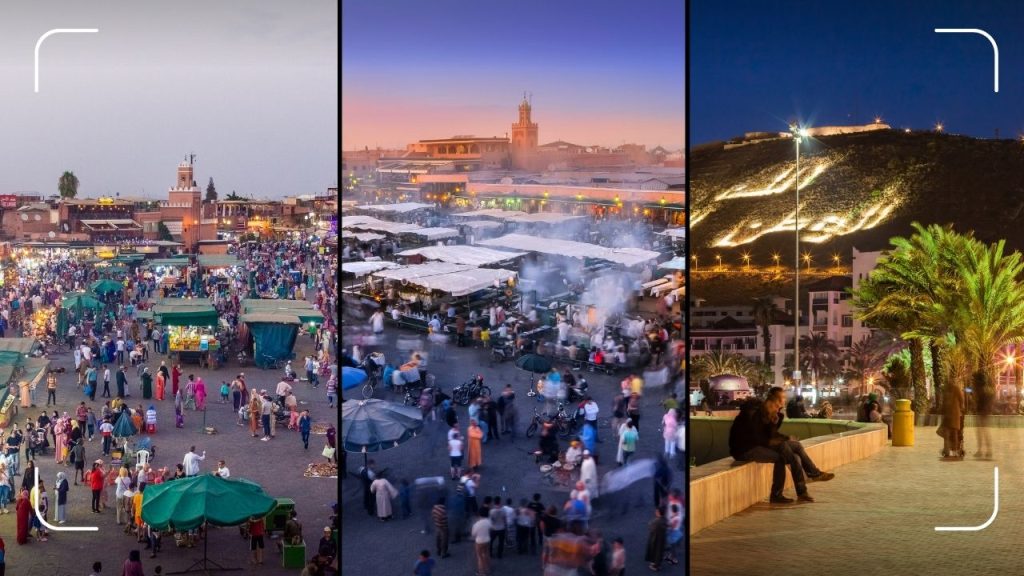
All roads eventually seem to lead to Jemaa el-Fnaa, the main square. During the day it’s open and chaotic in a low-key way; by evening it transforms into a lively scene of food stalls, performers, musicians, and locals meeting friends. Sitting with a fresh juice or simple street food and watching the square come alive is a classic Marrakech moment.
Gardens, palaces, and museums (short visits, well chosen)
These places give balance to the intensity of the medina. You don’t need many—just a few well-picked stops.
- Bahia Palace – Elegant courtyards and rooms that show traditional Moroccan craftsmanship.
- El Badi Palace – Open ruins with a sense of scale and history, best enjoyed slowly.
- Majorelle Garden – Calm, colorful, and refreshing, especially after busy souks.
One or two of these is usually enough for a first visit.
Hammam and food: the real Marrakech experience
A hammam visit is not just about relaxation—it’s cultural. Whether traditional or more comfortable, it’s a reset for the body after walking the city. Many travelers say this becomes one of their favorite memories.
Food is equally important. Try a mix: simple street food, a local restaurant in the medina, and one relaxed dinner in a riad or rooftop. Moroccan cuisine is about slow cooking, spices, and sharing, not rushing.
How to enjoy Marrakech without stress
The key is pace. Don’t try to see everything in one day. Start early, take breaks, and return to your riad in the afternoon if needed. Accept that getting a little lost is part of the experience. Say “no thank you” politely, keep plans flexible, and let the city come to you. Marrakech rewards travelers who slow down and stay curious.
Best things to do in Agadir (beyond the beach)
Agadir is often described as a beach city—and that’s true—but the experience goes further than simply lying by the ocean. The key is to enjoy its rhythm and use it as a comfortable base.
Beach promenade and the sunset routine
The promenade is the heart of daily life in Agadir. Locals and visitors walk it in the late afternoon, stop for coffee, let children play, or simply watch the ocean. As a local guide, I always recommend making sunset part of your routine here. The light softens, the temperature drops, and the city feels most alive—but never rushed, especially when exploring what to do in Agadir at night. Even if you don’t swim, this daily walk becomes a simple pleasure that defines the stay.
Souk and local market experience
To see everyday Agadir beyond hotels, spend time at Souk El Had. It’s large but well organized, with sections for produce, spices, clothing, household goods, and local food. This isn’t a tourist performance—it’s where locals shop. Go during the day, take your time, and treat it as a cultural stop rather than a shopping mission.
Viewpoints and the kasbah area (brief but worthwhile)
Above the city sits the old Agadir Kasbah. There isn’t much to explore structurally, but the view is the reason to go. From here, you see the entire coastline, the port, and the city stretching along the Atlantic. It’s especially nice late in the day, when the light is clear and calm.
Water activities (easy to add, not mandatory)
Agadir is one of the easiest places in Morocco to try ocean activities without pressure. Surfing, sailing, or jet ski options are widely available and well suited for beginners. You don’t need to plan much in advance—many travelers decide the same day based on weather and mood. It’s about access and flexibility, not adrenaline.
Agadir as a base (important for trip planning)
What many visitors miss is that Agadir works best as a base, not a checklist city. You sleep comfortably, enjoy the beach daily, and add short excursions when you want—without packing and unpacking. This makes Agadir ideal for families, relaxed couples, and travelers who want Morocco without constant movement.
Beaches and ocean time
If beach time is important to your trip, this is where the difference between Agadir and Marrakech becomes very clear.
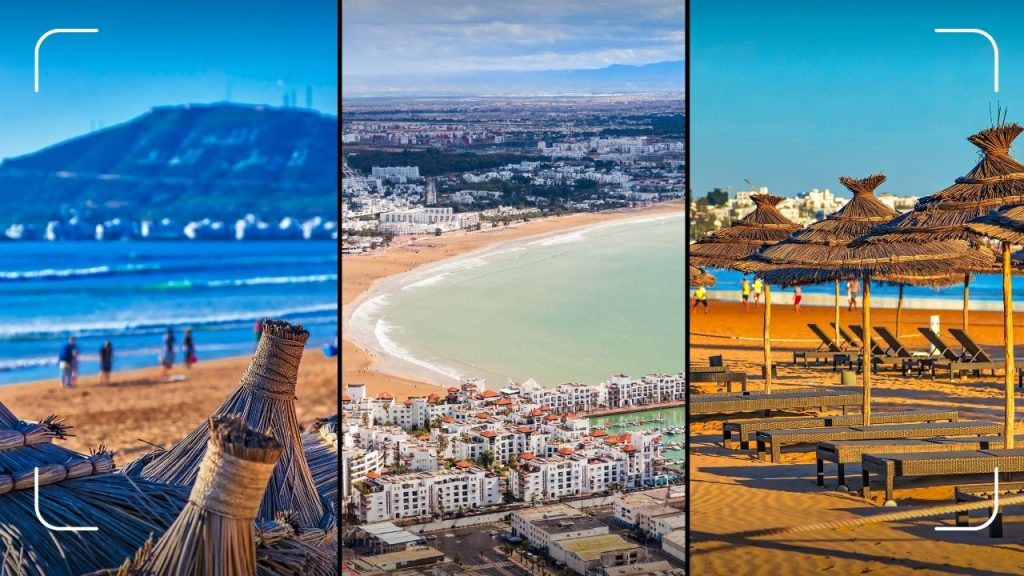
Agadir is built around its beach. Expect long, wide stretches of sand, gentle waves most days, and plenty of space to relax. Beach days here are easy and flexible—you can walk down in the morning, leave for lunch, come back later, and stay for sunset without planning anything. The atmosphere is casual rather than party-focused, which works well for families, couples, and travelers who enjoy simple routines. You don’t need to “organize” the beach in Agadir; it’s part of daily life. Even if you don’t swim much, the ocean shapes the city’s mood, weather, and pace.
Marrakech, on the other hand, is an inland city. There is no beach, no ocean breeze, and no seaside downtime built into the day. That doesn’t mean you can’t combine Marrakech with ocean time—it just requires a small adjustment. Most travelers either do a long day trip to the coast or spend one or two nights outside the city to break up the stay. This works especially well if you want Marrakech for culture and atmosphere but still need a pause from the heat and activity.
As a local guide, I often suggest being honest about expectations. If waking up near the ocean and spending slow hours by the water is a priority, Agadir should be part of your plan. If the beach is more of a “nice extra” rather than the focus, Marrakech still works—just don’t expect spontaneous beach days without leaving the city.
Day trips that can change your decision
Many travelers choose between Agadir and Marrakech based on the cities alone—but day trips often change the decision completely. This is one of the most overlooked planning points.
From Marrakech: mountains, valleys, and desert-style landscapes
Marrakech has some of the strongest day-trip variety in Morocco. With an early start, you can leave the busy city behind and reach very different landscapes in a few hours.
Trips toward the Atlas Mountains and nearby valleys offer cooler air, traditional villages, and scenic views. These outings usually mean leaving early in the morning and returning by late afternoon or early evening. They’re full days, but very rewarding—especially if you want contrast after medina life.
Desert-style experiences are also possible as long day trips. While they don’t replace a multi-day desert journey, they give you a taste of wide-open spaces, changing colors, and quieter scenery. These trips require patience with driving time, but they show how quickly Morocco’s landscapes change once you leave the city.
Who this suits: travelers who enjoy variety, don’t mind early starts, and want to experience mountains or desert without changing hotels.
From Agadir: surf coast villages and nature valleys
Agadir’s day trips feel lighter and more relaxed. Instead of long inland drives, most excursions follow the coast or head into nearby green valleys.
Along the coast, small villages with surf culture and ocean views are easy half-day or full-day outings. The focus is slow exploration, cafés, cliffs, and beaches rather than packed schedules. These trips pair well with returning to Agadir in time for sunset and dinner.
Inland, nature valleys such as Paradise Valley offer palm trees, pools, and walking paths. These outings are less demanding, often starting later in the morning and ending comfortably in the afternoon. They work well for families and travelers who don’t want long driving days.
Why this matters:
If day trips are important to you, Marrakech suits travelers who want dramatic landscape changes and full adventure days, while Agadir is better for easy excursions that still leave time to relax. This difference alone often determines which city feels right.
Weather and best time of year (what locals actually plan around)
Weather is one of the main reasons locals choose when and where to travel—and it affects Marrakech and Agadir very differently.
Marrakech sits inland, surrounded by plains and mountains, so it feels hotter and drier for much of the year. Late spring through early autumn can be intense during the day, especially when walking in the medina. Locals plan activities early in the morning, rest in the afternoon, and go out again in the evening. The most comfortable periods are spring and autumn, when days are warm but manageable and nights are pleasant. Winter is also popular: days are mild and sunny, though mornings and evenings can feel cool, especially if you’re planning things to do in Marrakech in December.
Agadir is shaped by the Atlantic Ocean. The sea moderates temperatures, making the city feel milder and more consistent year-round. Even in warmer months, the heat is softer, and evenings stay comfortable. One local detail many travelers don’t expect is the morning sea mist, especially in certain seasons. It usually clears by late morning, but it can make early hours feel grey and cool before the sun breaks through. By afternoon, conditions are often ideal for the beach.
Simple month-based guidance (local logic)
- Winter: Both cities work well. Marrakech is excellent for sightseeing; Agadir is pleasant but slightly cooler by the ocean.
- Spring: One of the best times for both—balanced weather, good visibility, and comfortable days.
- Summer: Agadir is the safer choice due to ocean breezes. Marrakech is still possible but best for travelers who handle heat well.
- Autumn: Very good for both again, with Marrakech feeling lively and Agadir still warm enough for swimming—especially useful when planning what to wear in Marrakech in November.
If weather is your main concern, Agadir offers consistency. If you’re planning around culture and atmosphere, Marrakech shines outside the hottest months.
If you’re visiting in winter, knowing what to wear in Morocco in December helps you stay comfortable during the day and evening.
Costs and value (what tends to be cheaper and why)
Costs in Morocco vary a lot by travel style, and this is especially true when comparing Marrakech and Agadir. Neither city is “cheap” or “expensive” by default—the value depends on how you travel.
Marrakech offers a very wide range of options. You can stay in simple guesthouses or beautiful riads, eat for little or spend more on rooftop dining, and move around on foot. However, costs often add up through experiences. Guided visits, attractions, hammams, and day trips are part of what makes Marrakech special, but they increase the daily budget without always feeling obvious. Many travelers spend more than expected simply because there is so much to do and see in a short time.
Agadir works differently. The city is known for resort-style stays, where accommodation, comfort, and location are bundled together. This can feel like good value, especially for families and longer stays, because daily expenses are more predictable. At the same time, Agadir also suits independent travelers who choose apartments or hotels and keep costs steady by focusing on the beach and simple outings. Since many activities are outdoors and optional, it’s easier to control spending.
Practical comparison
- In Marrakech, you may save on accommodation or food, but spend more on activities and excursions.
- In Agadir, accommodation may look higher at first, but daily spending is often lower and more stable.
As a local guide, I usually say this:
Marrakech gives high cultural value for active travelers, while Agadir offers comfort value for travelers who want clarity and ease. The better choice depends on whether you prefer experiences or predictability.
Where to stay (riads vs resorts, and what that changes)
Where you stay in Marrakech or Agadir doesn’t just affect comfort—it completely shapes your experience of the city.
Marrakech: riads, medina life, or calmer districts
In Marrakech, staying in a riad is part of the journey. Riads are traditional homes hidden behind plain doors, opening into quiet courtyards with fountains, plants, and terraces. Inside the medina, you can step straight into the souks and return to calm within minutes. This contrast is what many travelers love most.
That said, the medina isn’t for everyone. It’s walkable, but busy, and navigation can feel confusing at first. Some travelers—especially families or light sleepers—prefer staying just outside the medina in calmer districts, where access is easier and evenings are quieter. You’ll trade some atmosphere for convenience, but it can reduce daily fatigue.
How many nights is enough in Marrakech?
For a first visit, 3 to 4 nights works well. This gives time to explore the medina, enjoy food and a hammam, and possibly add one short excursion without rushing.
Agadir: beachfront convenience or quieter areas
In Agadir, accommodation is more straightforward. Most visitors choose beachfront hotels, where the ocean is part of daily life. This option is ideal if you want easy access to the promenade, restaurants, and sunset walks. Everything is simple and predictable.
Others prefer quieter areas slightly away from the main beachfront, which can feel more residential and relaxed. These areas suit longer stays, families, or travelers who plan to use Agadir mainly as a base for day trips rather than a resort-style holiday.
How many nights is enough in Agadir?
Agadir benefits from a slower pace. 3 to 5 nights is ideal, especially if you want real beach time and a couple of easy excursions without moving hotels.
In short: Marrakech accommodation is about immersion, while Agadir accommodation is about ease. Choosing the right style makes the difference between feeling rushed and feeling settled.
Food scene (what to expect day-to-day)
Food is a big part of daily life in both cities, but the experience feels very different.
Marrakech has strong street-food energy mixed with traditional restaurants and riad dining. You’ll see grills, bread ovens, and small local spots everywhere, especially in and around the medina. Meals are often slow and social, built around classic dishes cooked with time and spices. Evenings feel lively, with many people eating late. The variety is wide, and part of the fun is mixing simple local places with one or two more atmospheric dinners.
Agadir is shaped by the ocean, so seafood naturally plays a bigger role. Menus are simpler, portions are generous, and dining often comes with an ocean view. Beachfront cafés, casual restaurants, and hotel dining are common, and the atmosphere is relaxed rather than busy. Resort menus are reliable, while local places focus on fresh fish and straightforward Moroccan cooking.
How to choose a good place (local tips)
These tips work in both cities and help avoid disappointment:
- Look for locals eating there. A simple place full of locals is usually a good sign.
- Don’t chase décor. In Morocco, great food often comes from modest settings.
- Keep menus simple. Short menus usually mean fresh ingredients and daily cooking.
- Ask what’s popular today. The best dish is often not the one you planned to order.
- Avoid pressure. A good restaurant doesn’t need aggressive invitations.
- Timing matters. Busy times mean fresher food and better atmosphere.
Day to day, Marrakech feels more intense and varied, while Agadir feels easy and consistent. Neither is better—it depends on whether you enjoy discovery and energy or comfort and simplicity.
Getting around and travel time between them
Getting around Marrakech and Agadir is straightforward, but the experience feels very different in each city.
Within each city
In Marrakech, much of daily sightseeing happens on foot inside the medina. Streets are narrow, full of life, and not designed for cars. Walking is part of the experience, but it can feel intense—especially at first. Distances look short on a map but take longer due to crowds and winding alleys. For places outside the medina, taxis are common and practical.
Agadir is the opposite. The city is modern and spread out, with wide roads and longer distances between areas. Walking works well along the promenade and beachfront, but for most other trips you’ll rely on taxis. Movement here feels easier and less stressful, with fewer surprises.
Between Marrakech and Agadir
Traveling between the two cities is very doable and doesn’t require flying. Most travelers choose between:
- Bus: Comfortable, affordable, and reliable. It’s a good option if you’re traveling independently and don’t mind a fixed schedule.
- Private driver: More flexible and comfortable, especially for families or groups. You can stop along the way and travel at your own pace.
The journey takes most of a day, including breaks. As a local guide, I recommend treating this as a transfer day, not a sightseeing day. Leave in the morning, arrive in the afternoon, check in, and enjoy a calm evening.
If you plan it this way, moving between Marrakech and Agadir feels smooth and becomes part of the trip rather than a disruption.
Safety, hassle factor, and comfort (honest but calm)
Both Marrakech and Agadir are generally safe for travelers, but the day-to-day comfort level feels different—and that matters just as much as safety itself.
Marrakech is busy and interactive. In the medina, you’ll often be approached by sellers, guides, or people offering help. This is part of how the city works, not a sign of danger, but it can feel overwhelming if you’re not prepared. The key is confidence and politeness: a calm “no, thank you” and continuing to walk is usually enough. Planning your days with breaks, choosing clear meeting points, and not overloading your schedule helps reduce fatigue. Many travelers feel more relaxed after the first day, once they understand the rhythm.
Agadir feels much calmer by comparison. The city is spread out, interactions are fewer, and tourism is more structured. You’re less likely to be approached while walking, especially along the promenade or near hotels. This makes Agadir particularly comfortable for families, first-time travelers, and those who prefer a low-pressure environment. Standard travel awareness still applies—watch personal belongings, use licensed taxis—but the overall atmosphere is relaxed.
Reassuring local perspective
- Violent crime against tourists is rare in both cities.
- Most “hassle” is verbal and easy to manage with calm boundaries.
- Comfort improves greatly when you choose the right area to stay and pace your days.
As a local guide, I always say this: Marrakech asks for engagement, while Agadir offers ease. Both are safe; the difference is how much energy you want to spend navigating your surroundings.
For women traveling alone, this is a common concern—here’s a detailed guide on is Morocco safe for solo female travelers.
Safety, hassle factor, and comfort (honest but calm)
Both Marrakech and Agadir are generally safe for travelers, but the day-to-day comfort level feels different—and that difference matters just as much as safety itself.
Marrakech is busy and interactive. In the medina, you will likely be approached by sellers, guides, or people offering help. This is part of the city’s rhythm, not a sign of danger, but it can feel overwhelming if you’re not used to it. The easiest way to handle this is simple and polite: a calm “no, thank you” and continuing to walk is usually enough. Avoid engaging in long explanations. Planning your days with breaks, returning to your riad in the afternoon, and dressing comfortably—especially for women planning what to wear in January in Marrakech—makes a big difference.
Many first-time visitors also ask about clothing norms, especially can ladies wear shorts in Marrakech, which directly affects comfort.
Agadir is generally calmer and more predictable. The city is spread out, tourism is more organized, and interactions are limited. Walking along the promenade or staying near the beach feels relaxed, and most travelers notice the lower hassle level immediately. This makes Agadir especially comfortable for families, first-time visitors, and anyone who prefers a quiet environment. Standard travel awareness still applies—watch personal belongings and use official taxis—but stress levels tend to stay low.
Balanced local perspective
- Both cities are considered safe for tourists.
- Most “hassle” is verbal and easy to manage with confidence.
- Comfort depends more on pacing and location than on the city itself.
As a local guide, I usually explain it this way: Marrakech requires energy and attention, while Agadir offers ease and space. Neither is unsafe—the choice is about how much interaction you want in your daily travel.
Which is better for your travel style?
Instead of asking which city is “better,” it’s more useful to ask which one fits you. This is how I usually guide travelers based on experience.
Families
Agadir is generally the easier choice for families. The pace is calm, streets are wide, beaches are accessible, and accommodation is straightforward. Children have space to move, and days are simple to plan. Marrakech can still work for families, especially with older children, but it requires more planning, breaks, and patience with crowds.
Couples
Both cities suit couples, but in different ways. Marrakech is ideal for couples looking for atmosphere—riads, rooftop dinners, hammams, and lively evenings. Agadir fits couples who want to relax together, walk by the ocean, and keep things easy without constant activity. The choice depends on energy versus calm.
Solo travelers
Marrakech attracts solo travelers who enjoy culture, photography, and social energy. It’s engaging and never feels dull, though it can be intense at first. Agadir suits solo travelers who prefer independence and quiet, especially those who enjoy long walks, cafés, or working remotely by the sea.
Surfers / beach people
For anyone focused on the ocean, Agadir is the clear winner. Surf access, beach routines, and coastal day trips are part of everyday life. Marrakech works only if the beach is a side plan rather than a priority.
Culture lovers / photographers
Marrakech is the stronger choice. The medina, daily life, architecture, and changing light offer endless material. Agadir is pleasant but more modern and less visually complex.
In short:
Choose Marrakech for depth, culture, and energy.
Choose Agadir for ease, space, and the ocean.
Suggested itineraries (copy-paste planning)
These simple itineraries are based on how travelers actually move on the ground. They’re realistic, balanced, and easy to adapt.
3 days: pick one city
- Marrakech (3 days):
Focus on the medina, souks, main square, one palace or garden, a hammam, and relaxed evenings. Keep the pace light and don’t overbook. Three days is enough to feel the city without exhaustion. - Agadir (3 days):
Stay near the beach, enjoy daily walks on the promenade, visit the souk, and add one light outing. This works well for a short, calm break focused on rest and sunshine.
5 days: one city + a day trip
- Marrakech (4 + 1):
Spend four days in the city, then add one full day trip to the mountains or nearby valleys. This gives contrast and a break from the medina while keeping one hotel base. - Agadir (4 + 1):
Use Agadir as a base for beach time, then add one easy day trip along the coast or into a nature valley. You’ll still have plenty of downtime.
7–9 days: split Marrakech + Agadir
This is the most balanced option for first-time visitors.
- Days 1–3 or 4: Marrakech
Explore the medina, food scene, and cultural highlights. - Transfer day:
Travel in the morning by bus or private driver. Treat this as a travel day, not sightseeing. Arrive in the afternoon and rest. - Remaining days: Agadir
Slow down with beach time, sunsets, and one or two relaxed excursions.
This split gives you culture first, relaxation last, which most travelers find ideal.
Suggested itineraries (copy-paste planning)
These itineraries are designed the way locals plan trips: realistic pacing, minimal hotel changes, and clear priorities. You can copy, adjust, and use them as-is.
3 days: pick one city
Option A: Marrakech (3 days)
Day 1: Explore the medina on foot, get oriented, visit the main square in the evening.
Day 2: Gardens or a palace in the morning, souks at a relaxed pace, hammam in the afternoon, rooftop dinner at night.
Day 3: Slow morning, last walks through the medina, food-focused experiences or small museums.
This works well if you want atmosphere and culture without rushing.
Option B: Agadir (3 days)
Day 1: Beach walk, promenade, sunset routine.
Day 2: Souk visit and a relaxed afternoon by the ocean.
Day 3: Light excursion or water activity, then free time.
Best for travelers who want rest and simplicity.
5 days: one city + a day trip
Marrakech (4 days + 1 day trip)
Spend four days enjoying the city at an easy pace. Use the fifth day for a full-day trip to nearby mountains or valleys. Start early, return by evening, and keep the rest of the stay calm. This option adds contrast without changing hotels.
Agadir (4 days + 1 day trip)
Base yourself in Agadir, enjoy beach days, and add one easy coastal or nature valley excursion. This keeps the trip relaxed while still showing a different side of the region.
7–9 days: split Marrakech + Agadir
This is the most balanced itinerary for first-time visitors.
- Days 1–3 or 4: Marrakech
Focus on the medina, food, hammam, and cultural highlights. Avoid packing too many activities into one day. - Transfer day
Travel in the morning by bus or private driver. Expect a full travel day with breaks. Arrive in the afternoon or early evening, check in, and rest. - Days 4–9: Agadir
Slow the pace completely. Enjoy the beach daily, add one or two short excursions, and let the ocean rhythm take over.
This plan works because it gives you energy first, rest later, which is how most travelers leave Morocco feeling satisfied rather than tired.
Can I do both in one trip?
Yes. Many travelers combine Marrakech and Agadir in one itinerary. The most comfortable way is to spend 3–4 nights in Marrakech for culture, then 3–5 nights in Agadir for the beach. Plan one full transfer day between the two cities and treat it as travel time, not sightseeing.
Which is better in winter or summer?
Winter: Both work well. Marrakech is excellent for sightseeing with mild daytime weather, while Agadir stays pleasant with cooler evenings by the ocean.
Summer: Agadir is generally the better choice. The Atlantic breeze keeps temperatures manageable, while Marrakech can feel very hot during the day. Marrakech is still possible in summer, but it suits travelers who are comfortable planning early mornings and late evenings.
Which is more authentic?
It depends on what you mean by “authentic.”
Marrakech feels more traditional, with an old medina, historic architecture, and daily life that hasn’t changed much over time.
Agadir is modern and rebuilt, but that doesn’t make it less Moroccan—it simply reflects a different, contemporary side of the country. Authenticity can exist in both, just in different forms.
Which is better without a car?
Marrakech works very well without a car. The medina is walkable, and taxis are easy to use for longer distances or day trips.
Agadir is also manageable without a car, but it’s more spread out. You’ll rely on taxis more often, especially if you stay away from the beachfront.
Conclusion
Marrakech and Agadir are not rivals—they simply offer two very different ways to experience Morocco. In one sentence: choose Marrakech for culture, history, and energy; choose Agadir for the beach, calm, and an easy pace.
The best choice isn’t about which city is “better,” but about what you want from this trip. If your goal is to dive into Moroccan life, explore old streets, taste traditional food, and feel constant movement, Marrakech will stay with you. If your goal is to slow down, enjoy the ocean, and travel with comfort and simplicity, Agadir will feel right.
Many travelers discover that the ideal answer is not choosing one over the other, but combining both. Decide based on your energy level, the season, and how you want to feel at the end of your journey—not on comparisons alone.