Many travelers coming to Morocco ask a very practical question before they even arrive: can I brush my teeth with tap water here? The honest answer depends on where you are, how sensitive your stomach is, and what kind of place you’re staying in. Water quality in Casablanca or Marrakech is not the same as in a small Atlas village or a desert camp. As local guides, we hear this concern all the time, so let’s explain it clearly, without fear or exaggeration, and break it down by region so you can decide what’s best for you.
Is Morocco’s Tap Water Treated and Safe?
In most of Morocco’s major cities, tap water is treated and monitored by official water authorities. The water usually goes through filtration and chlorination processes, and in places like Casablanca, Rabat, Marrakech, and Fes, it generally meets national safety regulations. From a technical point of view, this means the water is considered safe for daily use by local residents, including cooking and brushing teeth.
That said, “treated” does not always mean “the same everywhere.” Morocco is a large country, and water quality can change from one neighborhood to another. Aging pipes, building-level storage tanks, and local infrastructure all play a role. In some areas, especially older buildings, the water may travel through pipes that affect taste or quality by the time it reaches the tap.
Outside large cities, the situation can be different. Smaller towns and rural areas may rely on local wells or less consistent treatment systems. In these places, water quality can vary more widely from day to day. This is why you may hear different answers from different locals — their experience depends very much on where they live.
see our guide about can i drink tap water in Marrakech
Brushing Teeth — What Local Guides Say
As local guides, this is one of the most common questions we hear from travelers, and the honest answer is: it depends on where you are and how cautious you want to be.
Cities (Casablanca, Rabat, Fes, Marrakech)
In large cities like Casablanca, Rabat, Fes, and Marrakech, tap water is generally treated and many locals brush their teeth with it every day without any problems. In modern neighborhoods and good hotels or riads, the water system is usually reliable. Technically, brushing your teeth with tap water in these cities is considered low risk for most people.
However, travelers often have more sensitive stomachs than locals. Even if the water meets safety standards, your body may not be used to the local mineral content or bacteria. That’s why some visitors still prefer to use bottled or filtered water, even in big cities, especially during their first days in Morocco.
Smaller Towns & Rural Areas
In smaller towns, mountain villages, and rural areas, water quality is less consistent. Some places rely on wells, local springs, or older pipe systems. Even when water looks clear, bacteria levels can vary depending on the source and maintenance. In these areas, most local guides recommend using bottled or filtered water for brushing teeth, just to be on the safe side.
This is especially true in remote Atlas villages or near desert regions, where water infrastructure is more basic and not always centrally monitored.
Travel Tip Checklist
To decide whether to use tap water or bottled water for brushing your teeth, ask yourself:
- Are you staying in a modern hotel or a well-maintained riad?
- Is the location a major city or a rural area?
- Do you have a sensitive stomach or a history of travel-related stomach issues?
- Does your accommodation confirm the water is filtered?
If you’re unsure, using bottled or filtered water is a simple precaution and helps you avoid unnecessary discomfort during your trip.
Why Travelers Get Sick (Even If Water Is Treated)
When travelers get stomach issues in Morocco, it is not always because the water is unsafe. In many cases, the problem is how your body reacts to a new environment. Your gut microbiome is adapted to the bacteria and minerals from your home country. When you arrive in Morocco, even treated water can contain different microorganisms and mineral levels that your digestive system is not used to, which can cause discomfort.
Another factor is chlorine. Tap water in many cities is treated with chlorine to kill bacteria. While this is effective and considered safe, higher chlorine levels can irritate sensitive stomachs, especially for people who are already prone to digestive issues. This irritation can happen even if the water meets official safety standards.
In some regions, especially outside major cities, water may come from local wells or mixed sources. These are not always treated to the same level as urban water systems. Travelers may unknowingly use water from these sources when brushing teeth or washing food, which increases the chance of stomach upset. This combination of new bacteria, mineral differences, and treatment methods explains why some travelers get sick even when locals have no issues.
Safe Alternatives for Brushing Teeth
If you prefer to be cautious, there are simple and practical alternatives that many travelers use when brushing their teeth in Morocco.
Bottled Water
Using bottled water is the easiest option. Always check that the bottle cap is sealed before opening it. In shops and hotels, bottled water is widely available and inexpensive. Avoid refilled or previously opened bottles, especially in smaller towns or roadside stops.
Filtered Water at Riads and Hotels
Many riads and hotels provide filtered water systems for guests. This can include large refill stations, filtered taps, or water provided specifically for drinking. It’s always fine to ask the staff if the water is filtered and safe for brushing teeth. In well-run accommodations, this is very common and reliable.
Portable Filters and Tablets
Some travelers prefer to bring portable water filters or purification tablets. Compact filters work well for brushing teeth and are useful during excursions or overnight stays outside cities. Water purification tablets are another option, but they require waiting time before use and can affect taste. These solutions are especially helpful if you plan to visit rural areas, the Atlas Mountains, or desert camps where bottled water may be limited.
Regional Differences You Should Know
Water quality in Morocco varies by region, and understanding these differences helps you decide how cautious to be.
Cities vs Coast
In major cities such as Casablanca, Rabat, and Marrakech, tap water is treated and generally consistent, especially in modern areas. Coastal cities often have better infrastructure due to higher population density and tourism. However, older neighborhoods and buildings may still have aging pipes, which can affect water quality at the tap.
Atlas Mountains Villages
In the Atlas Mountains, many villages rely on local springs, wells, or small community systems. Water sources are more natural but less consistently treated. Quality can change with weather, season, and maintenance. In these areas, local residents are accustomed to the water, but travelers are advised to use bottled or filtered water for brushing teeth.
Sahara & Desert Camps
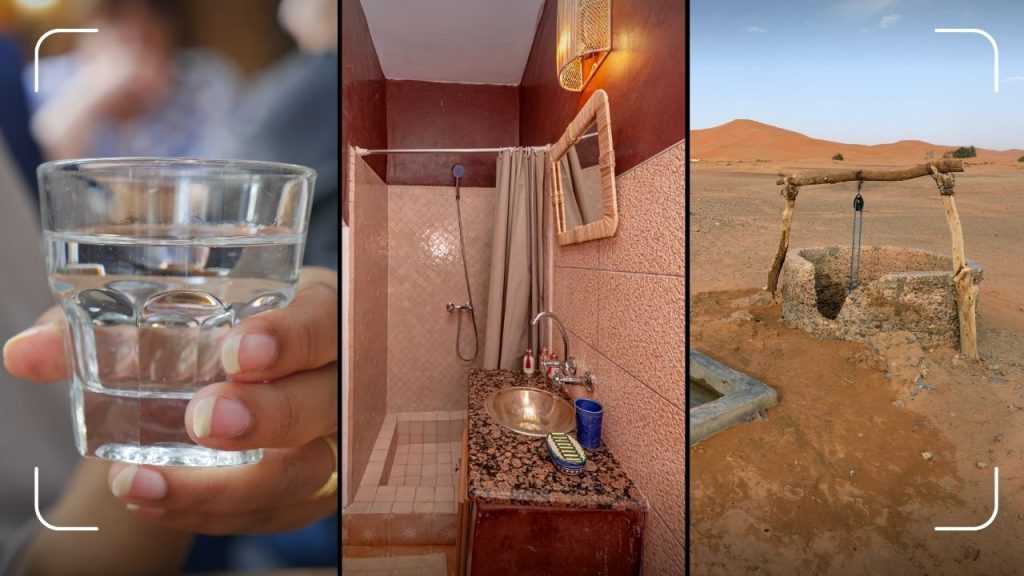
In desert regions and camps near areas like Merzouga, water is limited and usually transported from wells or nearby towns. Treatment levels vary, and water is mainly intended for washing rather than drinking. Most desert camps provide bottled water for guests, and this should also be used for brushing teeth to avoid stomach issues during your stay.
Quick Safety Tips for Water Use in Morocco
- Confirm water quality with your accommodation
When you arrive, ask your hotel or riad whether their tap water is filtered or treated at the building level. Staff are used to this question and will give you a clear answer. If they recommend bottled water, follow their advice. - Ask about ice before ordering drinks
In cafés, restaurants, and hotels, ask if ice is made from filtered or bottled water. In good establishments it usually is, but it’s always better to check, especially outside major cities. - Know your own digestion
If you have a sensitive stomach or tend to react when traveling, avoid tap water for brushing teeth and drinking, even in cities. Using bottled or filtered water is a simple precaution. - Be more cautious outside cities
In rural areas, mountain villages, and desert stops, always use bottled or filtered water for brushing teeth.
These small habits help prevent stomach issues and keep your trip comfortable.
Common Misconceptions & Myths
One common myth is that tap water in Morocco is always unsafe. This is not accurate. In many large cities, tap water is treated and used daily by locals without issues. The confusion comes from travelers sharing different experiences without mentioning where they stayed or their own sensitivity.
Another misconception is that getting sick automatically means the water was contaminated. In reality, many stomach problems are caused by changes in diet, spices, mineral content, or bacteria your body is not used to. Water is often blamed even when it is not the main cause.
Some travelers also believe bottled water is always safer. While it is usually a good option, improperly sealed or refilled bottles can exist, especially in non-touristic areas. This is why checking the seal is important.
There is also a myth that boiling water is unnecessary everywhere. In rural areas or places using wells, boiling or filtering water is still a good practice for travelers.
Finally, online advice often treats Morocco as one single case. Water quality varies by region, city, building, and even season. Understanding these differences helps you make practical decisions instead of relying on general warnings.
Conclusion — Honest Local Advice
Brushing your teeth in Morocco is not a simple yes-or-no answer. In big cities, tap water is treated and many locals use it daily, but travelers may still prefer bottled or filtered water, especially at the beginning of their trip. Outside cities, in rural areas and desert regions, using bottled water is the safer choice. The key is to know where you are, ask your accommodation, and listen to your own body. With a few simple precautions, you can travel comfortably and enjoy Morocco without unnecessary worry.