Planning a trip to Morocco in 2026? This complete Marrakech information for tourists guide will help you prepare for an amazing adventure. Marrakech is a city of bright colors, busy markets, and beautiful history. However, it can also be overwhelming for first-time visitors. From understanding local customs to figuring out transport, having the right information makes your trip much easier. In this guide, we cover everything you need to know about safety, money, what to wear, and the best places to see. Whether you are coming for a short weekend or a long holiday, use this marrakech morocco travel guide to plan your perfect trip. For official visa and entry details, always check the Moroccan National Tourist Office.
Marrakech at a Glance (Quick Facts Table)
Before you arrive, here are the most important facts you need to know about visiting Marrakech in 2026:
- Best time to visit: Spring (March to May) and Autumn (September to November) offer the best weather. If you wonder what to wear in Morocco in March, pack light layers for warm days and cool evenings.
- Typical budget: Low: $40-$60/day. Mid: $80-$150/day. Comfort/Luxury: $200+/day.
- Currency & payments: The Moroccan Dirham (MAD). Cash is necessary for souks and small shops, but hotels and nice restaurants accept cards.
- Language basics: Arabic and French are the main languages. English is spoken in tourist areas, but learning a simple “Salam” (Hello) or “Shukran” (Thank you) is very polite.
- Time needed: 2 to 4 days is ideal to see the city. Wondering how long is a flight to Morocco? Usually, it is just 3-4 hours from Europe!
Top Things to Do in Marrakech (Must-Sees + What to Expect)
Marrakech is divided into two main parts: the old city (Medina) and the new city (Gueliz and Hivernage). Each area offers a completely different experience for tourists. In the old city, you will step back in time, walking through narrow streets filled with spices, crafts, and history. In the new city, you will find modern cafes, wide streets, and beautiful green spaces. There is so much to visit in Morocco, but Marrakech is usually the number one stop. To help you plan your days, we have organized the best activities by area and interest. Whether you love history, shopping, or just relaxing in a beautiful garden, you will find plenty of amazing things to do here during your 2026 holiday.
Medina essentials (Jemaa el-Fna, souks, historic sites)
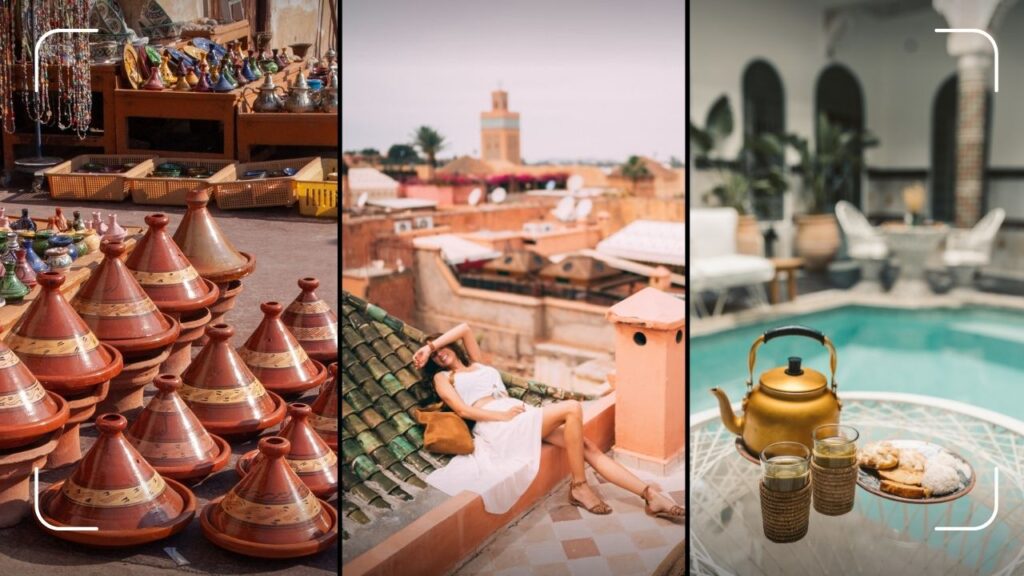
The Medina is the historic heart of Marrakech. You must start at Jemaa el-Fna, the famous main square. During the day, it is full of juice stalls and snake charmers; at night, it becomes a huge open-air food market. Next, explore the souks (markets) to buy leather goods, rugs, and pottery. Do not forget to bargain! For history, visit the Bahia Palace to see beautiful Islamic architecture and colorful tiles. You should also see the Koutoubia Mosque. Tourists cannot go inside, but the tall minaret is a famous symbol of the city and a great photo spot.
Gardens & modern Marrakech (Majorelle area, Guéliz vibe)
When the Medina feels too busy, escape to the modern areas of Marrakech. The most famous stop is Jardin Majorelle, a stunning botanical garden with bright blue buildings. Because it is very popular, you must buy tickets online in advance from the official Jardin Majorelle website. Right next door is the Yves Saint Laurent Museum, celebrating the famous designer’s love for the city. Afterwards, take a walk through the Guéliz neighborhood. This area has a European vibe with modern art galleries, trendy clothing stores, and great cafes where you can relax with a coffee.
“Best for…” mini list (families, couples, foodies, photographers)
- Families: Take a horse-drawn carriage ride (Caleche) around the city walls or visit the Oasiria Water Park to cool down.
- Couples: Enjoy a romantic dinner on a rooftop in the Medina, or book a private traditional Hammam (spa) experience. Many people ask, is Marrakech safe for couples? Yes, it is very safe and romantic!
- Foodies: Try a local food tour to taste authentic tagine, couscous, and mint tea in hidden local spots.
- Solo Travelers: Join a guided walking tour to meet others. If you wonder is Morocco safe for solo female travelers, it is, but dressing modestly helps you avoid unwanted attention.
Where to Stay (Best Areas + Who They’re For)
Choosing the right area to stay changes your whole experience.
- The Medina: Best for a traditional experience. Stay in a “Riad” (a traditional Moroccan house with an inner courtyard). It is walkable and exciting, but can be a sensory overload with noise and crowds.
- Guéliz & Hivernage: Best for travelers who prefer modern hotels, swimming pools, and easy access to taxis. It is quieter and less overwhelming than the old city. Many visitors comparing Casablanca or Marrakech nightlife prefer staying here for the evening entertainment.
- The Palmeraie: Best for luxury and relaxation. Located just outside the city, this palm tree oasis offers large resort hotels. If you are wondering where do the Beckhams stay in Marrakech, celebrities usually choose private luxury villas in this quiet, exclusive area.
Getting to Marrakech (Airport, Train, Bus)
Getting here in 2026 is easier than ever. Most tourists fly into Marrakech Menara Airport (RAK), which is very close to the city center. You might ask, how long is the flight from the UK to Morocco? It is usually just under 4 hours. From the airport, you can take a local bus or an official airport taxi to your hotel. If you are traveling from another Moroccan city, the train is fantastic. The ONCF official website lets you book comfortable train tickets from Casablanca or Tangier. When deciding is it better to fly into Casablanca or Marrakech, Marrakech is usually better for tourists. Finally, for budget travel between cities without train stations (like Agadir or Essaouira), use official CTM or Supratours buses.
Getting Around Marrakech (Taxis, Walking, Apps, Day Tours)
Once you arrive, getting around Marrakech requires a little patience and planning. The city is a mix of wide modern roads and tiny, ancient alleys where cars cannot go. Because of this, you will use a combination of walking, taxis, and maybe even a horse-drawn carriage during your stay. If you plan to rent a car, you might wonder, is it safe to drive in Morocco as a tourist? Driving outside the city is fine, but driving inside Marrakech can be very stressful due to heavy traffic and scooters. Most tourists find it much easier and safer to rely on local transport options rather than renting a vehicle for city exploration.
Taxis (how to agree price, common issues)
There are two types of taxis: “Petit Taxis” (small, for inside the city, max 3 passengers) and “Grand Taxis” (larger, for trips outside the city). Petit taxis are supposed to use a meter. Always ask the driver to turn it on (“Mettez le compteur, s’il vous plaît”). If they refuse, agree on a price before you get in. A short trip in the city usually costs 20 to 50 Dirhams. To avoid arguing over prices, many tourists now use ride-hailing apps like InDrive or Roby, which show you the exact price before you book your ride.
Inside the Medina (walking rules + navigation tips)
Inside the old Medina, walking is the only way to get around because the streets are too narrow for cars. However, you must always share these alleys with donkeys, handcarts, and fast-moving scooters. Always walk on the right side of the street. If you hear someone shout “Balak!” or “Attention!”, it means “Watch out!”—step to the side immediately. The Medina is like a maze, and it is very easy to get lost. Download an offline map on your phone, like Google Maps or Maps.me, before you go out. Do not rely on local teenagers for directions.
Best day trips from Marrakech (short list)
If you have extra time, take a day trip! The Atlas Mountains are just an hour away and offer beautiful hiking and traditional Berber villages. The Agafay Desert is close by for a rocky desert experience with camels and quad bikes. If you want the real sand dunes, you must go further. When choosing between Sahara desert Merzouga or Zagora, know that Merzouga has the biggest dunes but requires at least a 3-day trip. If you wonder is Merzouga desert safe, yes, guided tours are very safe and popular. Another great day trip is Essaouira, a relaxing coastal town.
Money, Prices & Tipping (What Tourists Should Know)
The currency is the Moroccan Dirham (MAD). While big hotels, supermarkets, and modern restaurants in Guéliz accept credit cards, cash is still king in Marrakech. You will definitely need cash for the souks, small cafes, and taxis. There are many ATMs around the city, and exchanging money at the airport or official exchange offices is easy.
Prices vary: a local mint tea costs around 10-20 MAD, while a nice dinner in a tourist restaurant might be 150-300 MAD. Tipping is a big part of the culture. It is customary to leave a 10% tip in restaurants if service is not included. You should also give 10-20 MAD to baggage handlers and hotel maids. Keep small coins handy for these situations.
Safety in Marrakech (Real Risks + How to Avoid Hassles)
Marrakech is generally a safe city for tourists, but you should be aware of common annoyances. The biggest issue is fake guides. If a stranger offers to show you the way to a square or a shop, politely say “No, thank you” and keep walking, or they will demand money. Also, be careful in Jemaa el-Fna square. If you take a photo of the monkeys or snake charmers, they will aggressively ask for payment.
At night, stick to well-lit, busy areas. Petty theft like pickpocketing can happen in crowded souks, so keep your bag zipped and close to your body. Regarding health, many tourists ask, can you drink tap water in Marrakech? It is safely treated, but tourists should stick to bottled water to avoid stomach issues.
Cultural Etiquette & Dress Code (Do’s and Don’ts)
Morocco is a Muslim country, and dressing respectfully is very important. Knowing what not to wear in Marrakech helps you blend in. Both men and women should cover their shoulders and knees. Women should avoid low-cut tops or very short skirts. Can ladies wear shorts in Marrakech? Yes, but longer shorts are more respectful.
Public behavior is also conservative. If you wonder, can you hold hands in Marrakech? Yes, holding hands is fine for married or established couples, but avoid kissing in public. Also, is it illegal to drink alcohol in Morocco? No, tourists can drink alcohol in licensed hotels, bars, and tourist restaurants, but drinking in the street or being visibly drunk in public is strictly forbidden and highly disrespectful.
Suggested Itineraries (Copy-Paste Plans)
Planning your days can be hard because there is so much to see. Marrakech can be very tiring, so it is best not to rush. A good plan mixes busy sightseeing in the morning with relaxing activities in the afternoon. When deciding between Agadir or Marrakech in November, Marrakech offers much better cultural sightseeing for short trips. If you only have a little time, you must prioritize the Medina. If you have more days, you can add modern museums, gardens, and maybe even a trip to the mountains. Here are three simple, copy-paste itineraries depending on how long you plan to stay in the city.
1 day (highlights route)
If you only have one day, focus entirely on the historic Medina. Start your morning early at the Bahia Palace before the big tour groups arrive. Then, walk over to look at the Koutoubia Mosque from the outside. In the afternoon, dive into the famous souks. Let yourself wander, look at the beautiful crafts, and practice your bargaining skills. As the sun sets, head to Jemaa el-Fna square. Find a cafe with a rooftop terrace, order a sweet mint tea, and watch the square come alive with food stalls and musicians.
2 days (medina + gardens + hammam)
For a two-day trip, follow the Day 1 itinerary first. On your second day, explore the modern side of the city. Start early at the beautiful Jardin Majorelle to enjoy the blue colors and plants, then visit the Yves Saint Laurent Museum next door. Have lunch in the trendy Guéliz neighborhood. In the afternoon, treat yourself to a traditional Moroccan Hammam. This is a deep-cleaning spa experience with black soap and scrubbing that will leave your skin feeling amazing. It is the perfect way to relax after walking all day.
3 days (add day trip or cooking class)
With three days, you have time to escape the city noise. After doing Days 1 and 2, use Day 3 for a day trip. Book an excursion to the Atlas Mountains. You can visit traditional Berber villages, hike to waterfalls in the Ourika Valley, and enjoy a traditional tagine lunch with amazing mountain views. Alternatively, if you want to stay in the city, take a Moroccan cooking class in the morning to learn how to make your own tagine, and visit the peaceful Secret Garden (Le Jardin Secret) in the afternoon.
Opening Hours & Practical Basics (What’s Open When)
Understanding local timing is important. Most shops in the souks open around 9:30 AM and close late, around 9:00 PM. However, remember that Friday is the holy day in Islam. Many shops and stalls will close on Friday around midday for afternoon prayers, reopening a few hours later. If you want to know what you should know about Moroccan people, they value a slower pace of life, so expect some places to close for lunch. For big attractions like palaces and gardens, always arrive right when they open (usually 9:00 AM) to avoid the long lines and the hot afternoon sun.
Marrakech FAQ
Is Marrakech safe for tourists?
Yes, it is very safe. Violent crime against tourists is rare. The main things to watch out for are pickpockets in crowded areas and pushy fake guides. Stay alert, ignore aggressive sellers, and avoid walking down dark, empty streets in the Medina late at night.
How many days in Marrakech?
Three full days is the perfect amount of time. This gives you one day to explore the historic Medina, one day for the modern gardens and a relaxing hammam, and a third day to take a trip to the nearby Atlas Mountains.
Can I pay by card?
In modern hotels, large restaurants, and shops in Guéliz, you can easily use Visa or Mastercard. However, in the old Medina, the souks, small cafes, and for all taxis, you must use cash. Always carry some Moroccan Dirhams with you.
Do I need cash in the souks?
Yes, absolutely. Most small stall owners do not have card machines. You will need cash to buy souvenirs, street food, and to pay for small services. Having smaller coins and bills is also very helpful when you need to negotiate prices.
How do taxis work?
Always use official taxis. Petit taxis are for inside the city, and drivers should use a meter. If they refuse, agree on a fair price before getting inside. You can also download ride apps like InDrive to get fixed prices and avoid arguing.
Best area to stay: Medina or Guéliz?
Stay in the Medina inside a traditional Riad if you want an authentic, historic experience, though it can be noisy. Choose Guéliz if you prefer modern hotels, easy taxi access, and a quieter, more relaxed environment after a busy day.
Best day trips from Marrakech?
The most popular day trips are the Atlas Mountains for beautiful hiking and visiting Berber villages, the Agafay Desert for a quick rocky desert experience with camels, or the coastal city of Essaouira for fresh seafood and a relaxed beach vibe.